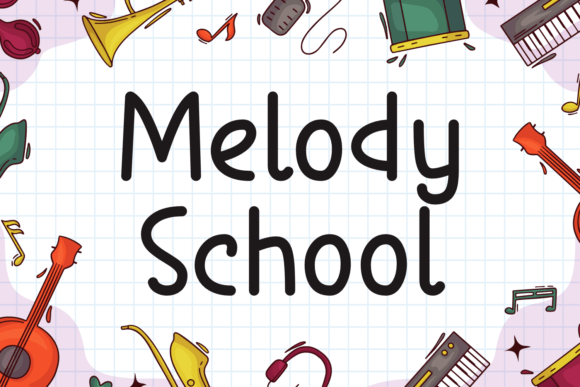
Melody School Font for Crafters
As a maker who spends countless hours designing labels, stickers, and printable templates, I know that the right typeface can make or break a product. It is not just about aesthetics; it is about communication. When a customer picks up a handmade candle or opens a digital planner, the font sets the tone before they even read the words. This is why Melody School has become a staple in my design toolkit. It is a neat and casual handwritten font that exudes a friendly and approachable vibe, perfectly bridging the gap between professional polish and handmade charm.
In the world of Script Handwritten Fonts, finding a balance between legibility and personality is often a challenge. Many scripts are too loopy for small labels, while others feel too rigid for creative projects. Melody School solves this with its smooth and flowing strokes, adding a touch of warmth and playfulness to any design. Whether you are creating boutique packaging for an Etsy shop or designing a welcome sign for a local event, this typeface offers the versatility needed for modern typography.
Why Melody School Works for Handmade Products
The visual personality of Melody School is distinct yet adaptable. It does not scream for attention with excessive swashes or dramatic contrasts. Instead, it whispers confidence. For crafters and small business owners, this subtlety is crucial. A premium font like this enhances the perceived quality of your physical products. When used on a minimalist soap label or a kraft paper gift tag, it suggests care and attention to detail. It helps build brand consistency, ensuring that your customers recognize your work instantly, whether they are viewing your social media graphics or holding your product in their hands.
This font excels in scenarios where you need to convey warmth without sacrificing clarity. Unlike some elaborate calligraphy styles that require large sizes to be readable, Melody School maintains its integrity at smaller scales. This makes it an excellent choice for product labels, ingredient lists on packaging, and small stickers. The neatness of the letters ensures that even when printed on textured paper or vinyl, the text remains crisp and inviting.
Practical Applications for Crafters and Sellers
The versatility of Melody School allows it to shine across a wide range of creative projects. Here are some specific ways I integrate this font into my workflow:
- Product Packaging and Labels: Use it for candle labels, jar stickers, and hang tags. Its casual nature pairs beautifully with rustic or modern minimalist branding.
- Wedding and Event Stationery: It is perfect for invitation suites, place cards, and menu designs. The friendly vibe makes formal events feel more welcoming and less stiff.
- Digital Printables: From planner headers to motivational wall art, Melody School adds a human touch to digital downloads. It works well for daily quotes, weekly spreads, and tracker pages.
- Signage and Decor: Create farmhouse-style wood signs, welcome boards, or seasonal decor. The flowing strokes look natural when cut from vinyl or painted by hand.
- Apparel and Merchandise: Ideal for t-shirt designs, tote bags, and mugs. Keep phrases short and sweet to maximize impact and readability.
For example, imagine a set of birthday invitations. Using Melody School for the name of the birthday child creates a focal point that feels personal and celebratory. Pair it with a simple sans serif font for the date and location details, and you have a balanced, professional-looking design that still feels handmade. Similarly, for a line of organic skincare products, using this font for the product name on a clear label allows the natural ingredients to take center stage while maintaining a cohesive brand identity.
Readability and Technical Considerations
When working with any script font, readability is paramount. Melody School is designed with clear letterforms, but there are best practices to ensure your designs remain effective. For cutting machines like Cricut or Silhouette, always check the weld settings. While Melody School is neat, ensuring that connecting strokes are properly joined prevents unwanted cuts in your vinyl projects. For printed materials, consider the contrast between the font color and the background. Dark gray or navy often looks softer and more sophisticated than pure black on white paper, enhancing the font’s approachable vibe.
If you are using Melody School for longer text blocks, proceed with caution. Handwritten fonts are primarily display fonts, meant for titles, names, and short phrases. For body text, such as product descriptions or long invitations, pair Melody School with a clean sans serif font or a traditional serif font. This combination creates a hierarchy that guides the reader’s eye. The script draws attention to the key information, while the secondary font provides easy reading for the details.
Font Pairing and Design Harmony
Creating a harmonious design often depends on effective font pairing. Melody School’s casual elegance makes it compatible with a variety of typefaces. For a modern, clean look, pair it with a geometric sans serif. This contrast highlights the organic flow of the handwritten style against the structured lines of the sans serif. For a more classic or romantic feel, try pairing it with a delicate serif font. This works exceptionally well for wedding stationery and high-end boutique branding.
Avoid pairing Melody School with other overly decorative scripts, as this can create visual clutter. The goal is to let the font breathe. Use whitespace effectively around the text to enhance its impact. In logo design, Melody School can serve as the primary element, with a simple tagline in a complementary font underneath. This approach establishes a strong brand identity that is both memorable and versatile across different mediums, from web design to physical packaging.
Licensing and Commercial Use
For small shop owners and commercial craft sellers, understanding licensing is critical. Before using Melody School in your products, always review the included license terms. Most premium fonts offer specific allowances for commercial use, covering physical products, digital downloads, and client work. Ensure that your intended use, such as selling printed invitations or creating SVG files for resale, is covered. Proper licensing protects your business and respects the creator’s work, allowing you to use these design assets with confidence.
Additionally, check for included extras such as alternates, ligatures, and multilingual support. These features can add uniqueness to your designs, allowing you to customize logos and headings further. Having access to different file formats ensures compatibility with various software, from Adobe Illustrator to Canva, streamlining your creative process.
In conclusion, Melody School is more than just a font; it is a tool for connection. Its ability to convey warmth and professionalism makes it an invaluable asset for any crafter or designer looking to elevate their products. By understanding its strengths and applying it thoughtfully, you can create designs that resonate with your audience and stand out in a crowded marketplace.